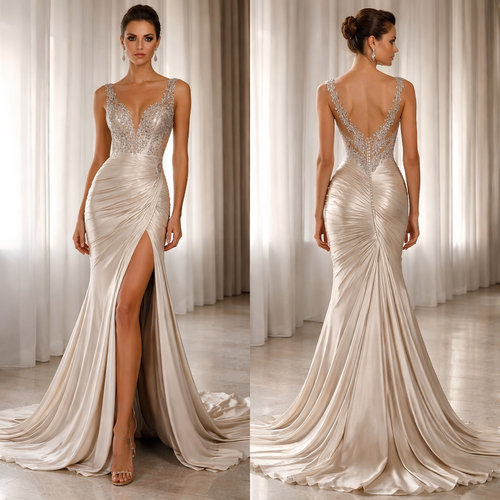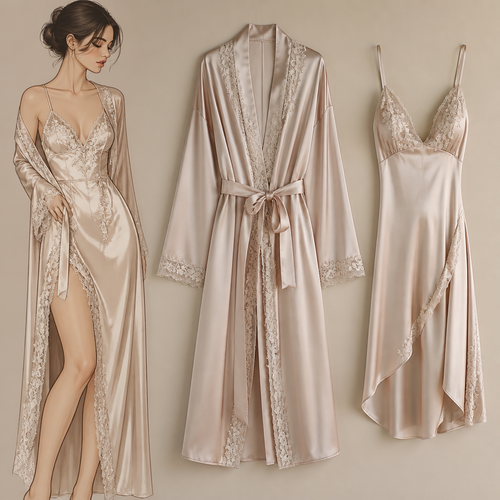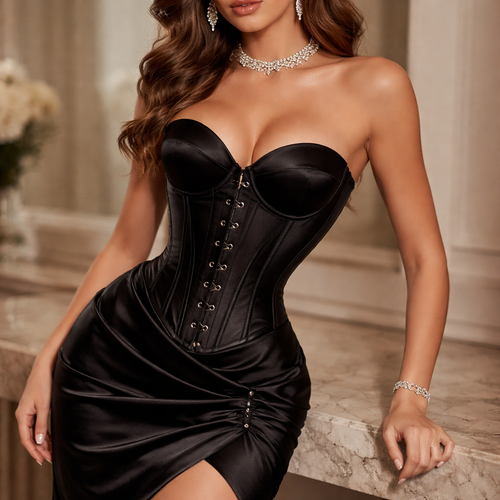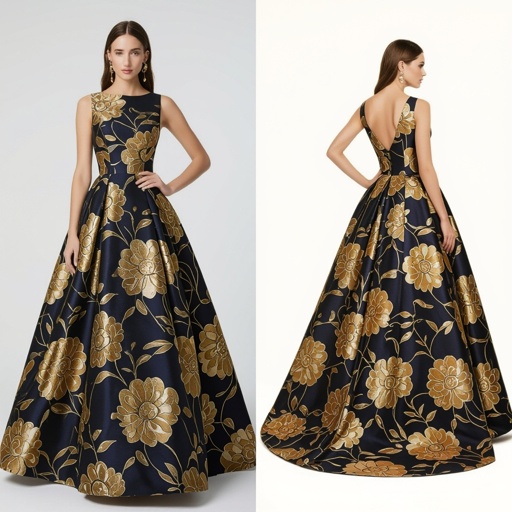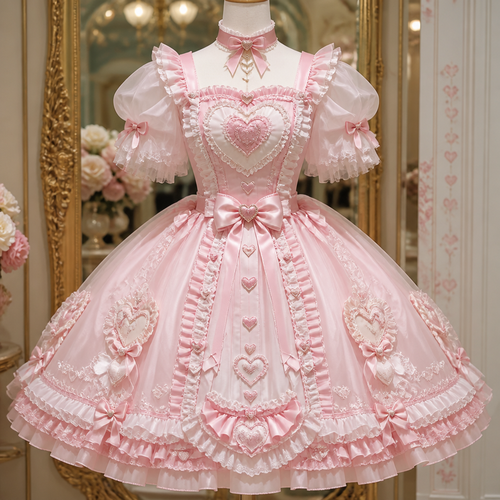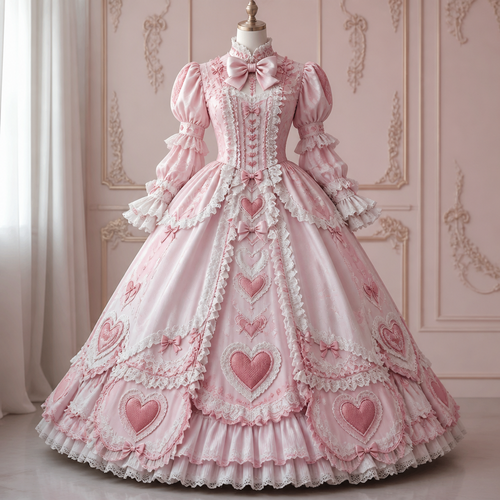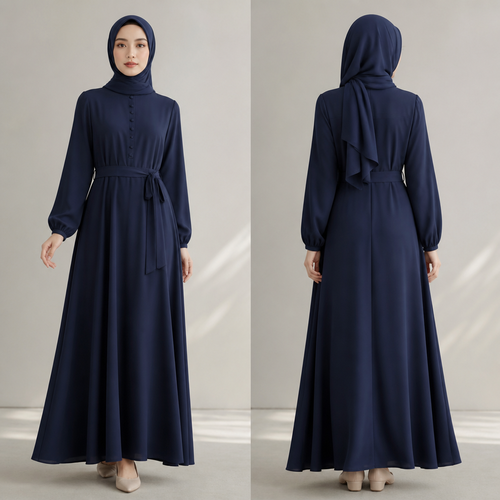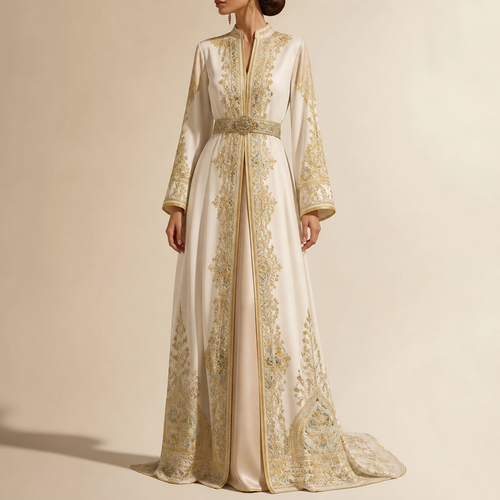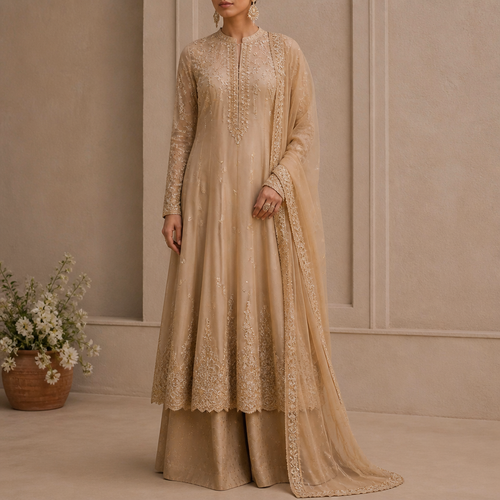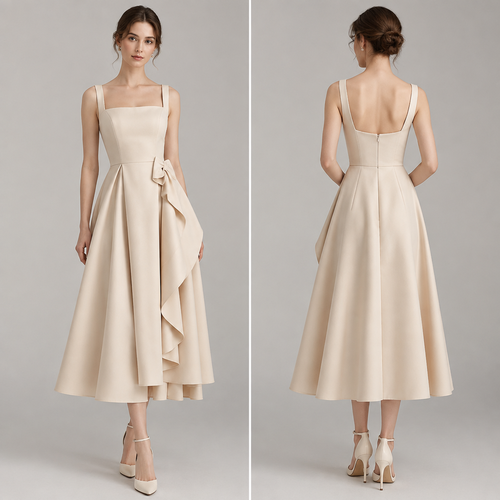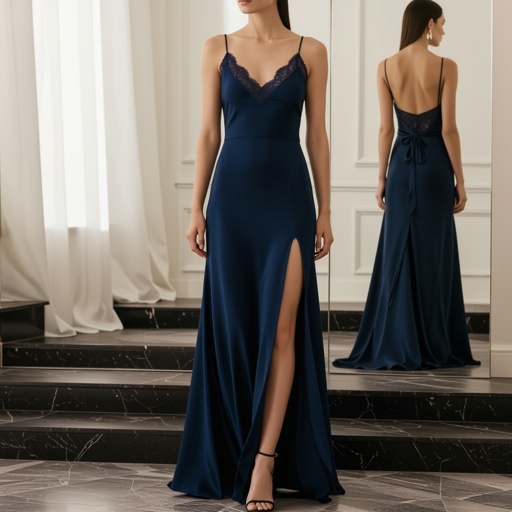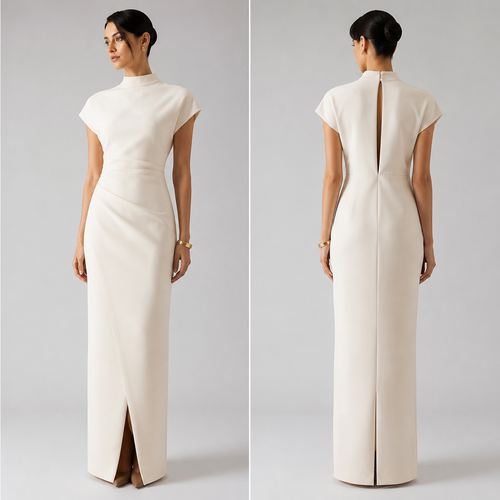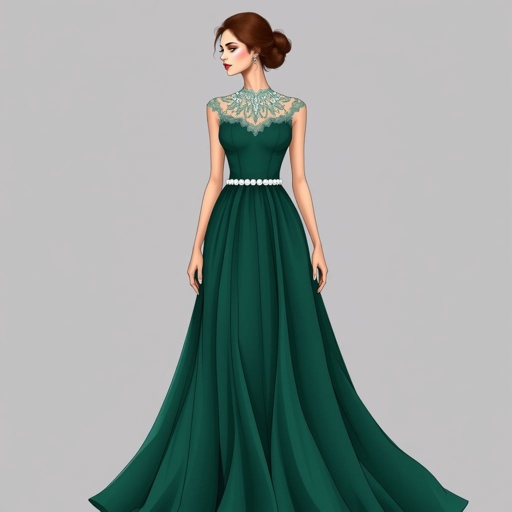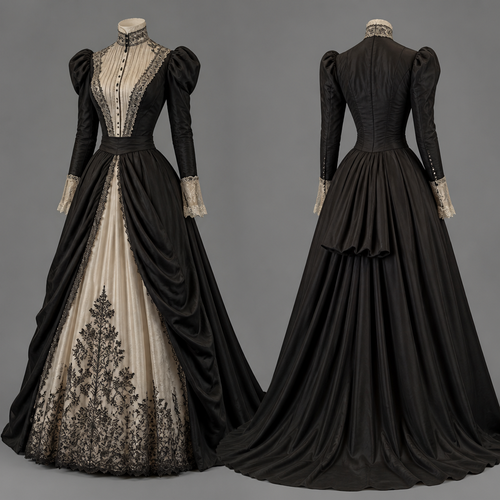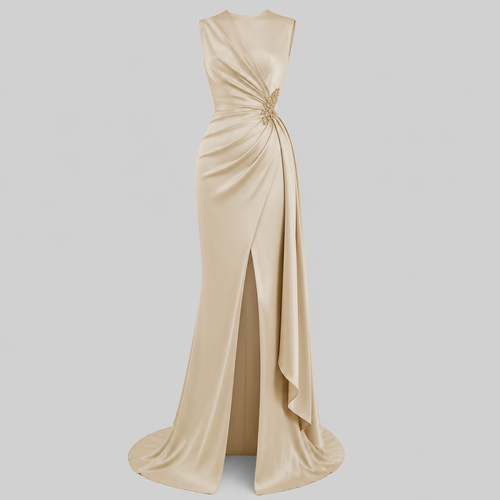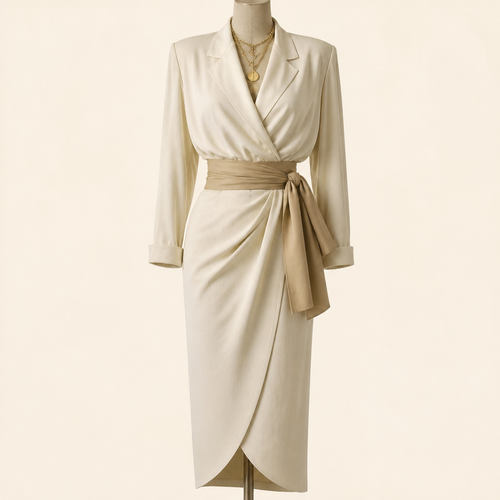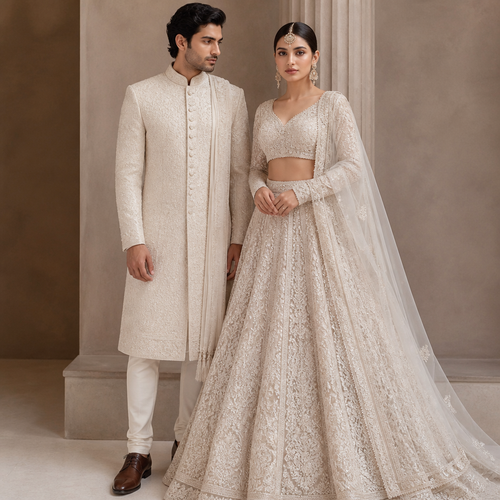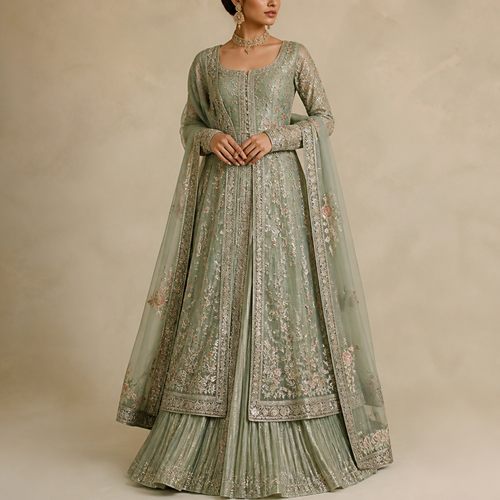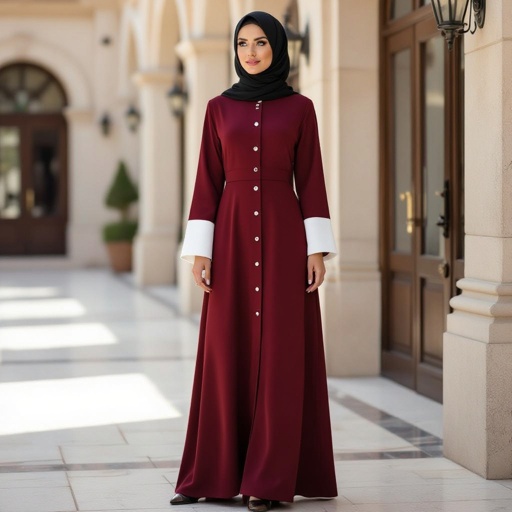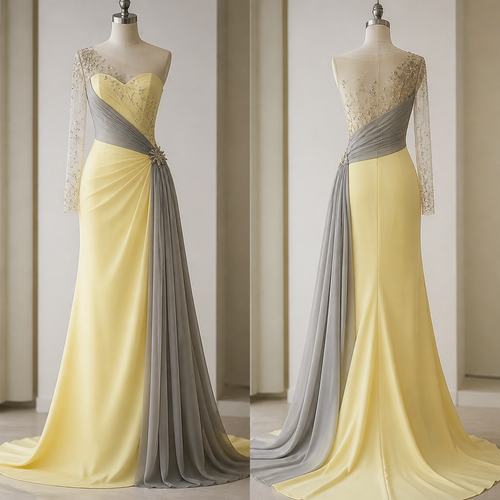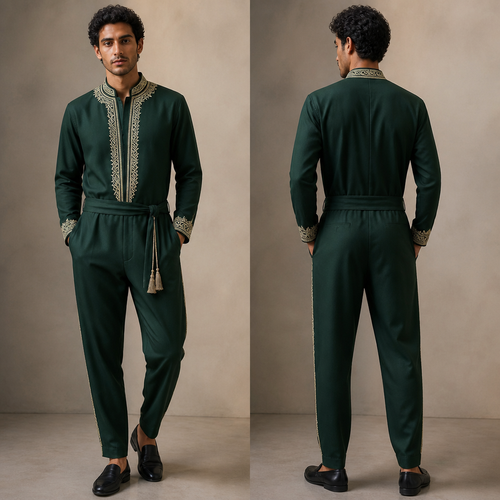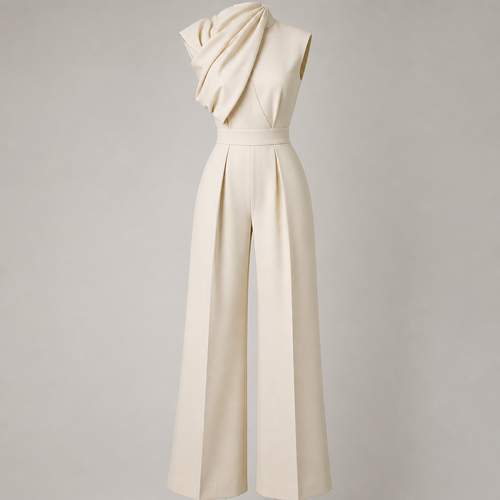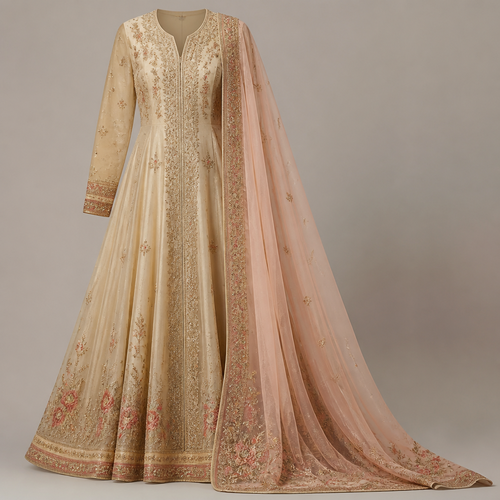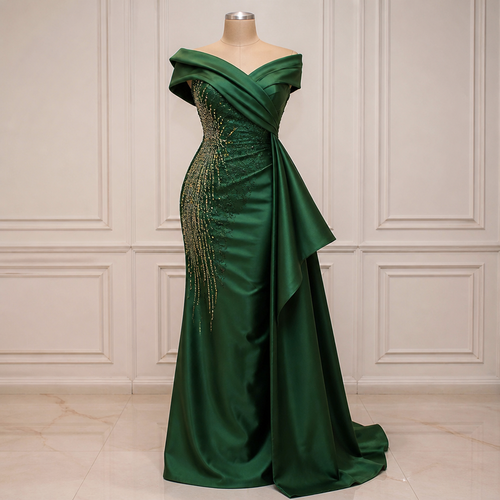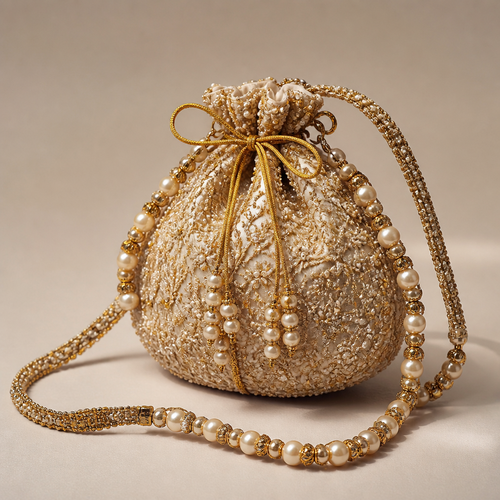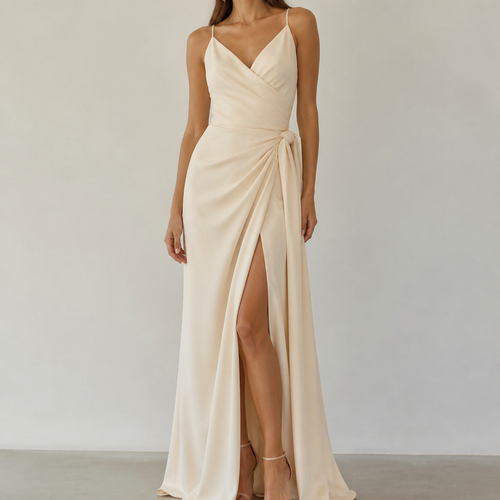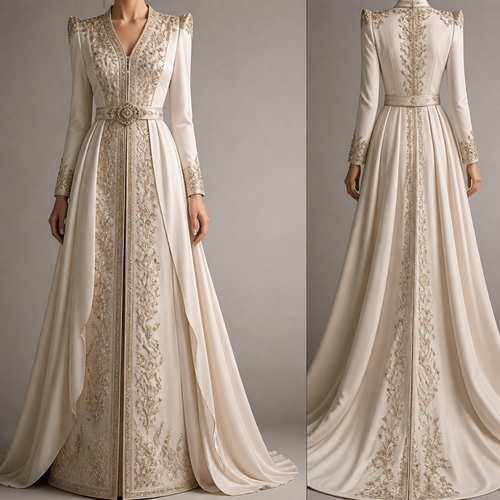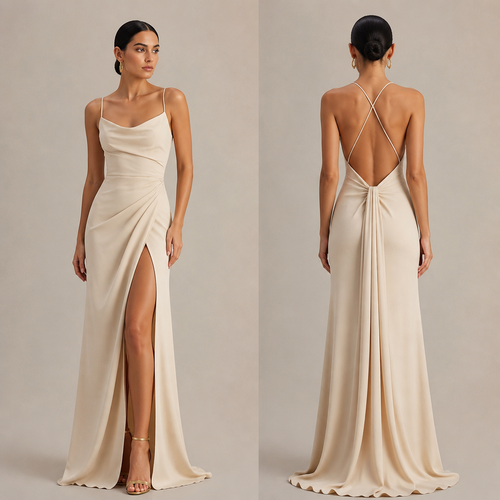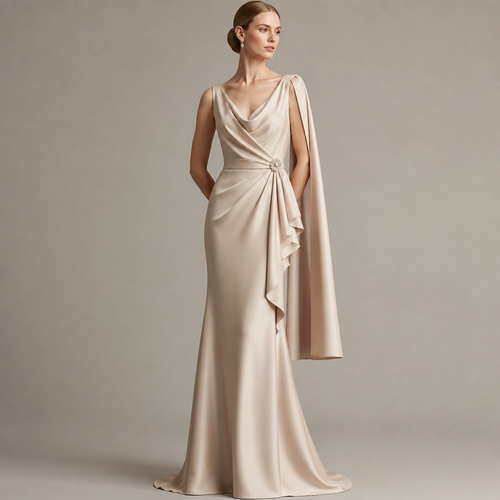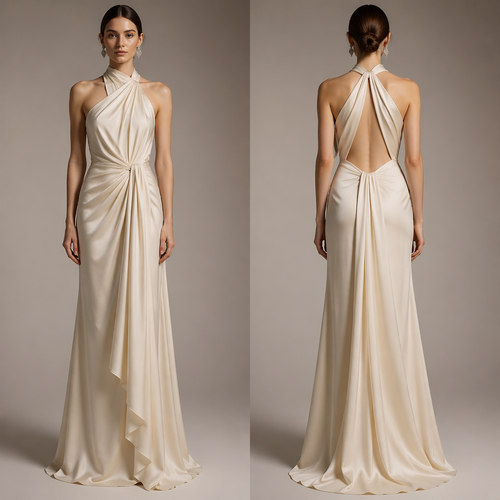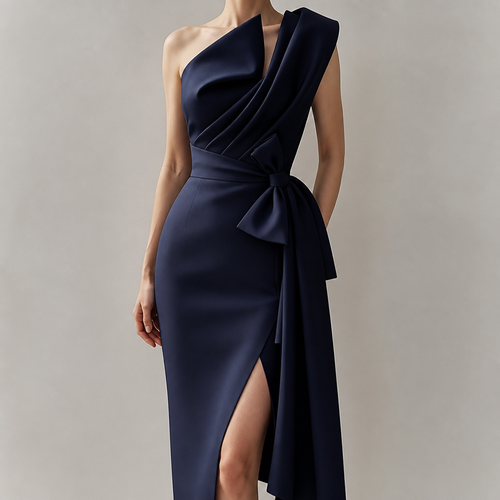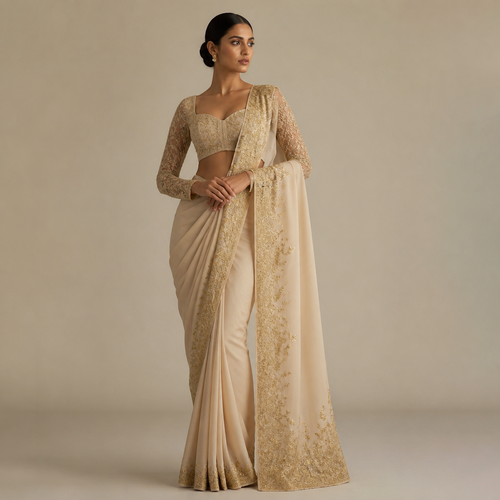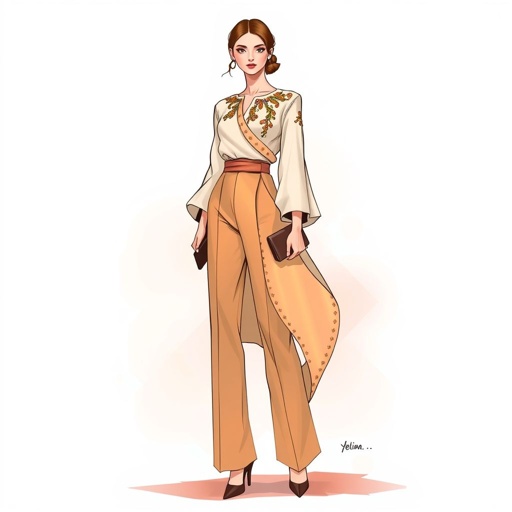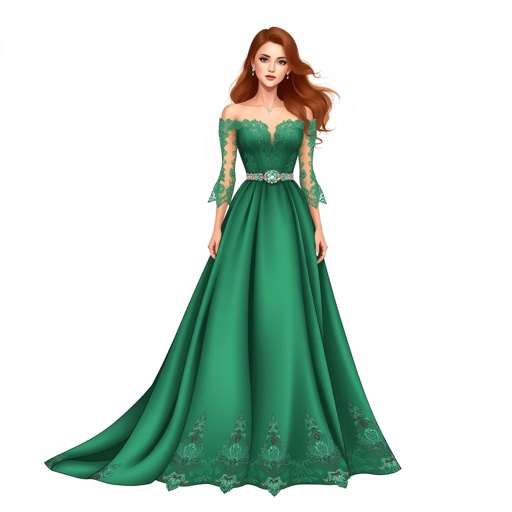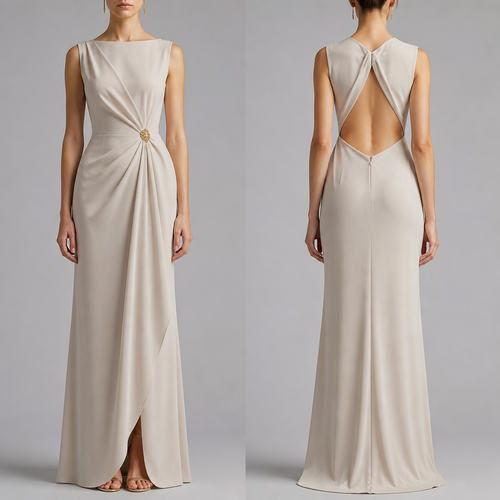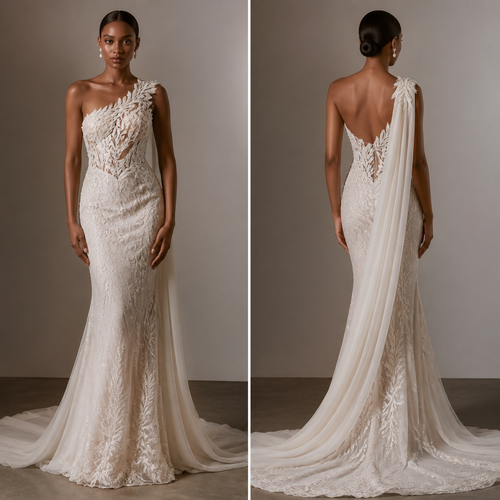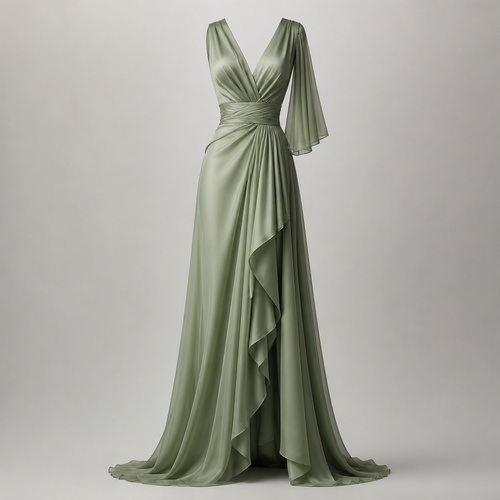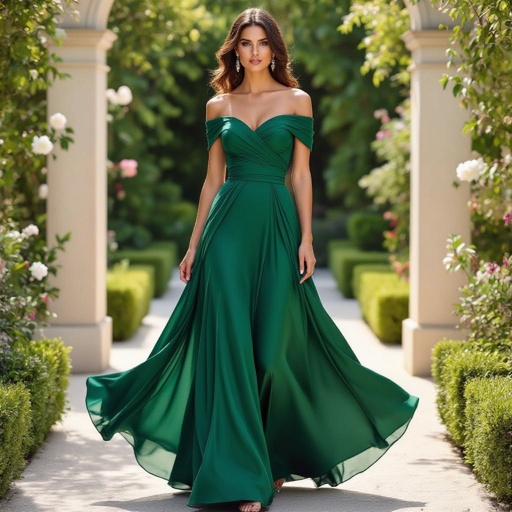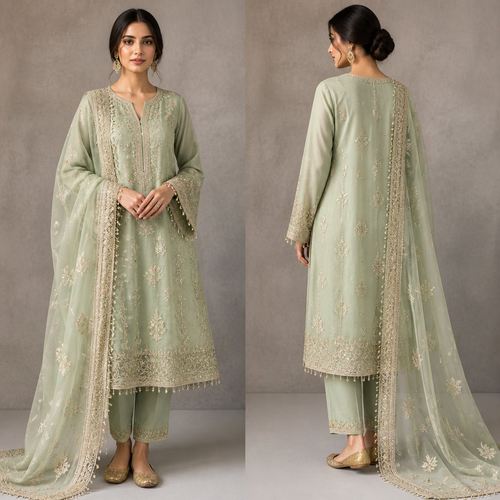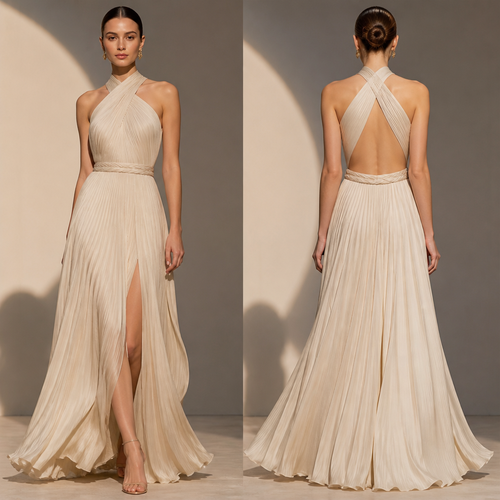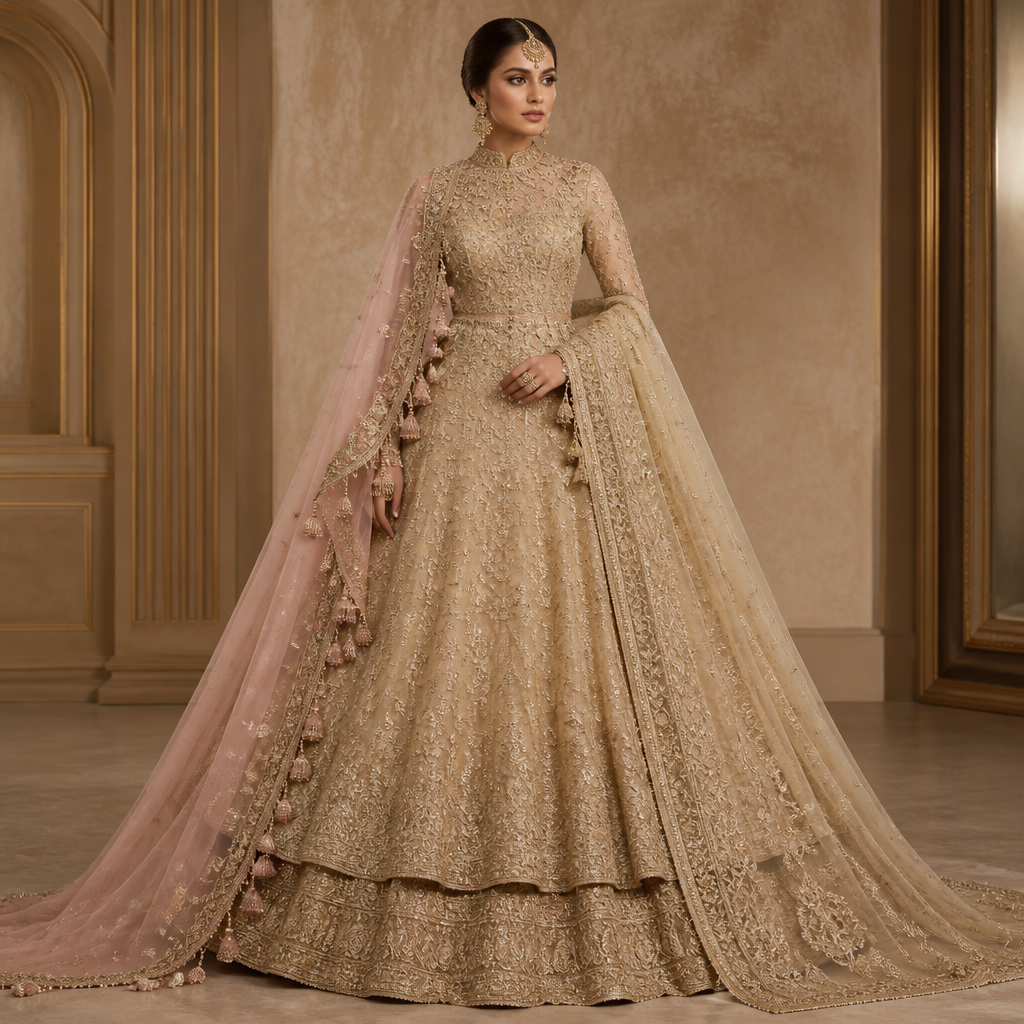
A Female Dress design, made of Silk, for Wedding, suitable for Summer, in Elegant style. Create a photorealistic high-fashion bridal outfit based primarily on the uploaded hand-drawn fashion sketch. The sketch is the exact design blueprint and must be followed precisely for the silhouette, construction, proportions, hem layers, sleeve shape, waist placement, shawl arrangement and overall design. Do NOT copy the garment silhouette from the reference photographs. Use the reference photographs only for the specified colour palette, embroidery language, border design and shawl-work inspiration.

MODEL & PRESENTATION

Create a full-length standing AI bridal fashion model wearing the complete outfit. The model should look like a real professional bridal fashion campaign model, with realistic human proportions, natural skin texture, elegant bridal makeup, refined hairstyle and sophisticated posture.

Show the entire outfit from head to floor, including the complete skirt, both shawls and the detailed hem. Use a clean luxury bridal studio/editorial setting with soft warm lighting. The final image should look like an actual professionally photographed couture bridal outfit, not a drawing or AI illustration.

MAIN OUTFIT — FOLLOW THE SKETCH EXACTLY

The main garment is a very full, elegant floor-length bridal gown/lehenga with a fitted upper bodice and dramatically flared skirt, exactly following the proportions and construction visible in the uploaded sketch.

- Fitted, elegant long-sleeved bodice.
- High, refined bridal neckline as shown in the sketch.
- Full-length fitted sleeves.
- The bodice and sleeves should have dense all-over couture embroidery.
- The waist should be fitted and clearly defined.
- From the waist, the skirt should open into a large, graceful flare.
- Preserve the panelled/flared construction visible in the sketch.
- Maintain the exact overall silhouette and proportions of the hand sketch.
- The garment should feel luxurious, heavy and structured while still falling naturally.
- Do not simplify the embroidery.

COLOUR PALETTE — REFERENCE PHOTO 1

Use the first uploaded photograph as the exact colour reference.

The main gown/skirt should be:

- warm champagne beige
- soft antique gold
- subtle ivory-gold highlights
- extremely delicate tonal beige/gold embroidery

The overall effect should be soft champagne-beige and antique-gold bridal couture, not yellow gold and not bright cream.

The shawls should introduce the same soft blush pink / dusty pink tone seen in the first photograph.

Keep the colour relationship elegant and harmonious:
champagne beige + antique gold + soft blush pink.

EMBROIDERY & SURFACE DETAIL

The main gown should have dense, luxurious traditional bridal embroidery throughout, inspired by the richness and intricate workmanship visible in the reference photographs.

Use:

- fine antique-gold embroidery
- champagne-gold threadwork
- delicate floral and paisley motifs
- fine vines and ornamental scrolling
- small sequins
- subtle zari-like detailing
- tiny reflective embellishments
- dimensional hand-embroidered texture

The embroidery should look handcrafted and expensive, with realistic thread, zari, sequins and bead texture.

Avoid large modern geometric motifs. The embroidery should feel traditional, intricate, feminine and couture.

WAIST / LOWER BODICE DETAIL — REFERENCE PHOTO 4

Use the 4th uploaded photograph specifically as the reference for the embroidery treatment around the lower bodice/waist area.

Add a concentrated decorative embroidered section immediately below and around the waist, using the same style of:

- intricate floral motifs
- scrolling vines
- small ornamental motifs
- dense traditional embroidery
- delicate antique-gold detailing

The waist decoration should visually connect the heavily embroidered bodice with the skirt.

Do not place this reference design randomly over the entire outfit. Adapt its embroidery language specifically to the lower waist/bodice area.

SKIRT — IMPORTANT DOUBLE-LAYER HEM

The skirt must have the double-layer hem construction clearly visible in the sketch.

The first/main skirt layer should have the all-over embroidery and flare shown in the sketch.

At the bottom, create a clearly visible second lower layer, maintaining the layered construction from the sketch.

The second layer must have a very heavy, elaborate border.

SECOND-LAYER BORDER — REFERENCE PHOTO 2

Use the 2nd uploaded photograph specifically as the reference for the heavy border design.

Recreate the same visual character of the border:

- multiple horizontal ornamental bands
- intricate floral motifs
- paisley-inspired motifs
- traditional decorative patterns
- antique-gold embroidery
- dense zari-style detailing
- layered borders
- small circular/ornamental elements
- fine finishing along the edge

Translate this border into the champagne beige + antique-gold colour palette of the main outfit.

The border should look extremely rich and heavy, like a couture bridal lehenga border.

Do not copy the magenta fabric colour from reference photo 2. Copy only the border design, embroidery density and arrangement.

The heavy border must clearly wrap around the lower second layer and be visible from the front.

TWO SHAWLS / DUPATTAS

The outfit must have TWO separate shawls/dupattas, exactly as represented in the sketch.

1. BLUSH PINK SHAWL

The first shawl should be a soft blush/dusty pink luxurious fabric, matching the pink tone of reference photo 1.

It should be elegant, lightweight and slightly lustrous.

Follow the shape and placement shown in the sketch.

Most importantly, recreate the decorative hanging/tassel details drawn on the edges of the shawl in the sketch.

The shawl should have:

- elegant embroidered border
- delicate antique-gold finishing
- multiple small hanging tassels/latkans along the edge
- graceful dangling embellishments
- realistic movement and weight

The hanging elements must be clearly visible and must look physically attached to the shawl edge.

Do not replace the hanging details with plain fringe.

2. CHAMPAGNE-BEIGE SHAWL

The second shawl should be champagne beige, matching the main gown.

Use the 3rd uploaded photograph as the embroidery/work reference.

Do not copy its dark maroon colour.

Instead, translate the same embroidery character into:

- champagne beige
- antique gold
- soft ivory
- subtle tonal gold

Use delicate floral motifs, ornamental embroidery, small scattered motifs and an elaborate embroidered border inspired by the third reference.

The beige shawl should look richly embroidered but still elegant and lightweight.

SHAWL ARRANGEMENT

Both shawls must be visibly separate and distinguishable.

Arrange them according to the uploaded sketch rather than copying the poses in the reference photographs.

One shawl can fall gracefully over the shoulders and torso while the second falls elegantly along the opposite side, creating a luxurious layered bridal styling.

Make sure neither shawl completely hides the bodice embroidery or the double-layer skirt border.

FABRIC REALISM

Make all materials look physically realistic.

The main skirt should have the appearance of a luxurious bridal fabric with enough structure to hold the dramatic flare.

The shawls should have a softer, fluid drape with subtle sheen.

Show realistic:

- fabric folds
- embroidery thickness
- bead reflections
- thread texture
- zari texture
- weight and gravity
- natural shadows
- realistic overlapping of fabrics

COUTURE FINISHING

Every edge should have professional couture finishing.

No unfinished seams, distorted embroidery, random patterns or floating decorations.

The embroidery must follow the direction and construction of the garment panels naturally.

The skirt should look extremely expensive, detailed and suitable for a high-end South Asian bridal couture collection.

FINAL IMAGE

Full-body standing pose, front three-quarter view so that the:

- fitted embroidered bodice
- waist embroidery
- full skirt
- double-layer hem
- heavy second-layer border
- blush-pink shawl
- beige embroidered shawl
- hanging tassels

are all clearly visible.

Photorealistic luxury bridal campaign photography, realistic model, realistic fabric, realistic embroidery, realistic jewellery styling, sophisticated warm studio lighting, high-end couture fashion editorial, ultra-detailed textile texture, sharp focus, natural proportions, premium bridal catalogue photography.

CRITICAL PRIORITY:

1. Follow the uploaded sketch for the garment construction and silhouette.
2. Reference photo 1 = EXACT colour palette.
3. Reference photo 2 = SECOND-LAYER HEAVY BORDER DESIGN ONLY.
4. Reference photo 3 = BEIGE SHAWL EMBROIDERY STYLE ONLY.
5. Reference photo 4 = LOWER-WAIST/BODICE EMBROIDERY STYLE ONLY.
6. The sketch = exact placement of both shawls and hanging details.
7. Do not merge or substitute details between the references.
8. Do not copy the colours of references 2–4.
9. Do not redesign the silhouette.
10. Preserve the double-layer hem exactly as shown in the sketch.
11. Make the final result look like a real photographed couture bridal outfit, not an AI-generated fashion illustration.. India fashion aesthetics.

photorealistic fashion design, A Female Dress design, made of Silk, for Wedding, suitable for Summer, in Elegant style. Create a photorealistic high-fashion bridal outfit based primarily on the uploaded hand-drawn fashion sketch. The sketch is the exact design blueprint and must be followed precisely for the silhouette, construction, proportions, hem layers, sleeve shape, waist placement, shawl arrangement and overall design. Do NOT copy the garment silhouette from the reference photographs. Use the reference photographs only for the specified colour palette, embroidery language, border design and shawl-work inspiration.

MODEL & PRESENTATION

Create a full-length standing AI bridal fashion model wearing the complete outfit. The model should look like a real professional bridal fashion campaign model, with realistic human proportions, natural skin texture, elegant bridal makeup, refined hairstyle and sophisticated posture.

Show the entire outfit from head to floor, including the complete skirt, both shawls and the detailed hem. Use a clean luxury bridal studio/editorial setting with soft warm lighting. The final image should look like an actual professionally photographed couture bridal outfit, not a drawing or AI illustration.

MAIN OUTFIT — FOLLOW THE SKETCH EXACTLY

The main garment is a very full, elegant floor-length bridal gown/lehenga with a fitted upper bodice and dramatically flared skirt, exactly following the proportions and construction visible in the uploaded sketch.

- Fitted, elegant long-sleeved bodice.
- High, refined bridal neckline as shown in the sketch.
- Full-length fitted sleeves.
- The bodice and sleeves should have dense all-over couture embroidery.
- The waist should be fitted and clearly defined.
- From the waist, the skirt should open into a large, graceful flare.
- Preserve the panelled/flared construction visible in the sketch.
- Maintain the exact overall silhouette and proportions of the hand sketch.
- The garment should feel luxurious, heavy and structured while still falling naturally.
- Do not simplify the embroidery.

COLOUR PALETTE — REFERENCE PHOTO 1

Use the first uploaded photograph as the exact colour reference.

The main gown/skirt should be:

- warm champagne beige
- soft antique gold
- subtle ivory-gold highlights
- extremely delicate tonal beige/gold embroidery

The overall effect should be soft champagne-beige and antique-gold bridal couture, not yellow gold and not bright cream.

The shawls should introduce the same soft blush pink / dusty pink tone seen in the first photograph.

Keep the colour relationship elegant and harmonious:
champagne beige + antique gold + soft blush pink.

EMBROIDERY & SURFACE DETAIL

The main gown should have dense, luxurious traditional bridal embroidery throughout, inspired by the richness and intricate workmanship visible in the reference photographs.

Use:

- fine antique-gold embroidery
- champagne-gold threadwork
- delicate floral and paisley motifs
- fine vines and ornamental scrolling
- small sequins
- subtle zari-like detailing
- tiny reflective embellishments
- dimensional hand-embroidered texture

The embroidery should look handcrafted and expensive, with realistic thread, zari, sequins and bead texture.

Avoid large modern geometric motifs. The embroidery should feel traditional, intricate, feminine and couture.

WAIST / LOWER BODICE DETAIL — REFERENCE PHOTO 4

Use the 4th uploaded photograph specifically as the reference for the embroidery treatment around the lower bodice/waist area.

Add a concentrated decorative embroidered section immediately below and around the waist, using the same style of:

- intricate floral motifs
- scrolling vines
- small ornamental motifs
- dense traditional embroidery
- delicate antique-gold detailing

The waist decoration should visually connect the heavily embroidered bodice with the skirt.

Do not place this reference design randomly over the entire outfit. Adapt its embroidery language specifically to the lower waist/bodice area.

SKIRT — IMPORTANT DOUBLE-LAYER HEM

The skirt must have the double-layer hem construction clearly visible in the sketch.

The first/main skirt layer should have the all-over embroidery and flare shown in the sketch.

At the bottom, create a clearly visible second lower layer, maintaining the layered construction from the sketch.

The second layer must have a very heavy, elaborate border.

SECOND-LAYER BORDER — REFERENCE PHOTO 2

Use the 2nd uploaded photograph specifically as the reference for the heavy border design.

Recreate the same visual character of the border:

- multiple horizontal ornamental bands
- intricate floral motifs
- paisley-inspired motifs
- traditional decorative patterns
- antique-gold embroidery
- dense zari-style detailing
- layered borders
- small circular/ornamental elements
- fine finishing along the edge

Translate this border into the champagne beige + antique-gold colour palette of the main outfit.

The border should look extremely rich and heavy, like a couture bridal lehenga border.

Do not copy the magenta fabric colour from reference photo 2. Copy only the border design, embroidery density and arrangement.

The heavy border must clearly wrap around the lower second layer and be visible from the front.

TWO SHAWLS / DUPATTAS

The outfit must have TWO separate shawls/dupattas, exactly as represented in the sketch.

1. BLUSH PINK SHAWL

The first shawl should be a soft blush/dusty pink luxurious fabric, matching the pink tone of reference photo 1.

It should be elegant, lightweight and slightly lustrous.

Follow the shape and placement shown in the sketch.

Most importantly, recreate the decorative hanging/tassel details drawn on the edges of the shawl in the sketch.

The shawl should have:

- elegant embroidered border
- delicate antique-gold finishing
- multiple small hanging tassels/latkans along the edge
- graceful dangling embellishments
- realistic movement and weight

The hanging elements must be clearly visible and must look physically attached to the shawl edge.

Do not replace the hanging details with plain fringe.

2. CHAMPAGNE-BEIGE SHAWL

The second shawl should be champagne beige, matching the main gown.

Use the 3rd uploaded photograph as the embroidery/work reference.

Do not copy its dark maroon colour.

Instead, translate the same embroidery character into:

- champagne beige
- antique gold
- soft ivory
- subtle tonal gold

Use delicate floral motifs, ornamental embroidery, small scattered motifs and an elaborate embroidered border inspired by the third reference.

The beige shawl should look richly embroidered but still elegant and lightweight.

SHAWL ARRANGEMENT

Both shawls must be visibly separate and distinguishable.

Arrange them according to the uploaded sketch rather than copying the poses in the reference photographs.

One shawl can fall gracefully over the shoulders and torso while the second falls elegantly along the opposite side, creating a luxurious layered bridal styling.

Make sure neither shawl completely hides the bodice embroidery or the double-layer skirt border.

FABRIC REALISM

Make all materials look physically realistic.

The main skirt should have the appearance of a luxurious bridal fabric with enough structure to hold the dramatic flare.

The shawls should have a softer, fluid drape with subtle sheen.

Show realistic:

- fabric folds
- embroidery thickness
- bead reflections
- thread texture
- zari texture
- weight and gravity
- natural shadows
- realistic overlapping of fabrics

COUTURE FINISHING

Every edge should have professional couture finishing.

No unfinished seams, distorted embroidery, random patterns or floating decorations.

The embroidery must follow the direction and construction of the garment panels naturally.

The skirt should look extremely expensive, detailed and suitable for a high-end South Asian bridal couture collection.

FINAL IMAGE

Full-body standing pose, front three-quarter view so that the:

- fitted embroidered bodice
- waist embroidery
- full skirt
- double-layer hem
- heavy second-layer border
- blush-pink shawl
- beige embroidered shawl
- hanging tassels

are all clearly visible.

Photorealistic luxury bridal campaign photography, realistic model, realistic fabric, realistic embroidery, realistic jewellery styling, sophisticated warm studio lighting, high-end couture fashion editorial, ultra-detailed textile texture, sharp focus, natural proportions, premium bridal catalogue photography.

CRITICAL PRIORITY:

1. Follow the uploaded sketch for the garment construction and silhouette.
2. Reference photo 1 = EXACT colour palette.
3. Reference photo 2 = SECOND-LAYER HEAVY BORDER DESIGN ONLY.
4. Reference photo 3 = BEIGE SHAWL EMBROIDERY STYLE ONLY.
5. Reference photo 4 = LOWER-WAIST/BODICE EMBROIDERY STYLE ONLY.
6. The sketch = exact placement of both shawls and hanging details.
7. Do not merge or substitute details between the references.
8. Do not copy the colours of references 2–4.
9. Do not redesign the silhouette.
10. Preserve the double-layer hem exactly as shown in the sketch.
11. Make the final result look like a real photographed couture bridal outfit, not an AI-generated fashion illustration.. India fashion aesthetics., elegant style, just the design no text

A Female Dress design, made of Silk, for Wedding, suitable for Summer, in Elegant style. Create a photorealistic high-fashion bridal outfit based primarily on the uploaded hand-drawn fashion sketch. The sketch is the exact design blueprint and must be followed precisely for the silhouette, construction, proportions, hem layers, sleeve shape, waist placement, shawl arrangement and overall design. Do NOT copy the garment silhouette from the reference photographs. Use the reference photographs only for the specified colour palette, embroidery language, border design and shawl-work inspiration. MODEL & PRESENTATION Create a full-length standing AI bridal fashion model wearing the complete outfit. The model should look like a real professional bridal fashion campaign model, with realistic human proportions, natural skin texture, elegant bridal makeup, refined hairstyle and sophisticated posture. Show the entire outfit from head to floor, including the complete skirt, both shawls and the detailed hem. Use a clean luxury bridal studio/editorial setting with soft warm lighting. The final image should look like an actual professionally photographed couture bridal outfit, not a drawing or AI illustration. MAIN OUTFIT — FOLLOW THE SKETCH EXACTLY The main garment is a very full, elegant floor-length bridal gown/lehenga with a fitted upper bodice and dramatically flared skirt, exactly following the proportions and construction visible in the uploaded sketch. - Fitted, elegant long-sleeved bodice. - High, refined bridal neckline as shown in the sketch. - Full-length fitted sleeves. - The bodice and sleeves should have dense all-over couture embroidery. - The waist should be fitted and clearly defined. - From the waist, the skirt should open into a large, graceful flare. - Preserve the panelled/flared construction visible in the sketch. - Maintain the exact overall silhouette and proportions of the hand sketch. - The garment should feel luxurious, heavy and structured while still falling naturally. - Do not simplify the embroidery. COLOUR PALETTE — REFERENCE PHOTO 1 Use the first uploaded photograph as the exact colour reference. The main gown/skirt should be: - warm champagne beige - soft antique gold - subtle ivory-gold highlights - extremely delicate tonal beige/gold embroidery The overall effect should be soft champagne-beige and antique-gold bridal couture, not yellow gold and not bright cream. The shawls should introduce the same soft blush pink / dusty pink tone seen in the first photograph. Keep the colour relationship elegant and harmonious: champagne beige + antique gold + soft blush pink. EMBROIDERY & SURFACE DETAIL The main gown should have dense, luxurious traditional bridal embroidery throughout, inspired by the richness and intricate workmanship visible in the reference photographs. Use: - fine antique-gold embroidery - champagne-gold threadwork - delicate floral and paisley motifs - fine vines and ornamental scrolling - small sequins - subtle zari-like detailing - tiny reflective embellishments - dimensional hand-embroidered texture The embroidery should look handcrafted and expensive, with realistic thread, zari, sequins and bead texture. Avoid large modern geometric motifs. The embroidery should feel traditional, intricate, feminine and couture. WAIST / LOWER BODICE DETAIL — REFERENCE PHOTO 4 Use the 4th uploaded photograph specifically as the reference for the embroidery treatment around the lower bodice/waist area. Add a concentrated decorative embroidered section immediately below and around the waist, using the same style of: - intricate floral motifs - scrolling vines - small ornamental motifs - dense traditional embroidery - delicate antique-gold detailing The waist decoration should visually connect the heavily embroidered bodice with the skirt. Do not place this reference design randomly over the entire outfit. Adapt its embroidery language specifically to the lower waist/bodice area. SKIRT — IMPORTANT DOUBLE-LAYER HEM The skirt must have the double-layer hem construction clearly visible in the sketch. The first/main skirt layer should have the all-over embroidery and flare shown in the sketch. At the bottom, create a clearly visible second lower layer, maintaining the layered construction from the sketch. The second layer must have a very heavy, elaborate border. SECOND-LAYER BORDER — REFERENCE PHOTO 2 Use the 2nd uploaded photograph specifically as the reference for the heavy border design. Recreate the same visual character of the border: - multiple horizontal ornamental bands - intricate floral motifs - paisley-inspired motifs - traditional decorative patterns - antique-gold embroidery - dense zari-style detailing - layered borders - small circular/ornamental elements - fine finishing along the edge Translate this border into the champagne beige + antique-gold colour palette of the main outfit. The border should look extremely rich and heavy, like a couture bridal lehenga border. Do not copy the magenta fabric colour from reference photo 2. Copy only the border design, embroidery density and arrangement. The heavy border must clearly wrap around the lower second layer and be visible from the front. TWO SHAWLS / DUPATTAS The outfit must have TWO separate shawls/dupattas, exactly as represented in the sketch. 1. BLUSH PINK SHAWL The first shawl should be a soft blush/dusty pink luxurious fabric, matching the pink tone of reference photo 1. It should be elegant, lightweight and slightly lustrous. Follow the shape and placement shown in the sketch. Most importantly, recreate the decorative hanging/tassel details drawn on the edges of the shawl in the sketch. The shawl should have: - elegant embroidered border - delicate antique-gold finishing - multiple small hanging tassels/latkans along the edge - graceful dangling embellishments - realistic movement and weight The hanging elements must be clearly visible and must look physically attached to the shawl edge. Do not replace the hanging details with plain fringe. 2. CHAMPAGNE-BEIGE SHAWL The second shawl should be champagne beige, matching the main gown. Use the 3rd uploaded photograph as the embroidery/work reference. Do not copy its dark maroon colour. Instead, translate the same embroidery character into: - champagne beige - antique gold - soft ivory - subtle tonal gold Use delicate floral motifs, ornamental embroidery, small scattered motifs and an elaborate embroidered border inspired by the third reference. The beige shawl should look richly embroidered but still elegant and lightweight. SHAWL ARRANGEMENT Both shawls must be visibly separate and distinguishable. Arrange them according to the uploaded sketch rather than copying the poses in the reference photographs. One shawl can fall gracefully over the shoulders and torso while the second falls elegantly along the opposite side, creating a luxurious layered bridal styling. Make sure neither shawl completely hides the bodice embroidery or the double-layer skirt border. FABRIC REALISM Make all materials look physically realistic. The main skirt should have the appearance of a luxurious bridal fabric with enough structure to hold the dramatic flare. The shawls should have a softer, fluid drape with subtle sheen. Show realistic: - fabric folds - embroidery thickness - bead reflections - thread texture - zari texture - weight and gravity - natural shadows - realistic overlapping of fabrics COUTURE FINISHING Every edge should have professional couture finishing. No unfinished seams, distorted embroidery, random patterns or floating decorations. The embroidery must follow the direction and construction of the garment panels naturally. The skirt should look extremely expensive, detailed and suitable for a high-end South Asian bridal couture collection. FINAL IMAGE Full-body standing pose, front three-quarter view so that the: - fitted embroidered bodice - waist embroidery - full skirt - double-layer hem - heavy second-layer border - blush-pink shawl - beige embroidered shawl - hanging tassels are all clearly visible. Photorealistic luxury bridal campaign photography, realistic model, realistic fabric, realistic embroidery, realistic jewellery styling, sophisticated warm studio lighting, high-end couture fashion editorial, ultra-detailed textile texture, sharp focus, natural proportions, premium bridal catalogue photography. CRITICAL PRIORITY: 1. Follow the uploaded sketch for the garment construction and silhouette. 2. Reference photo 1 = EXACT colour palette. 3. Reference photo 2 = SECOND-LAYER HEAVY BORDER DESIGN ONLY. 4. Reference photo 3 = BEIGE SHAWL EMBROIDERY STYLE ONLY. 5. Reference photo 4 = LOWER-WAIST/BODICE EMBROIDERY STYLE ONLY. 6. The sketch = exact placement of both shawls and hanging details. 7. Do not merge or substitute details between the references. 8. Do not copy the colours of references 2–4. 9. Do not redesign the silhouette. 10. Preserve the double-layer hem exactly as shown in the sketch. 11. Make the final result look like a real photographed couture bridal outfit, not an AI-generated fashion illustration.. India fashion aesthetics.

01Keep exploring

More Elegant